tripora – Smart Travel App
UI/UX Detailed Case Study
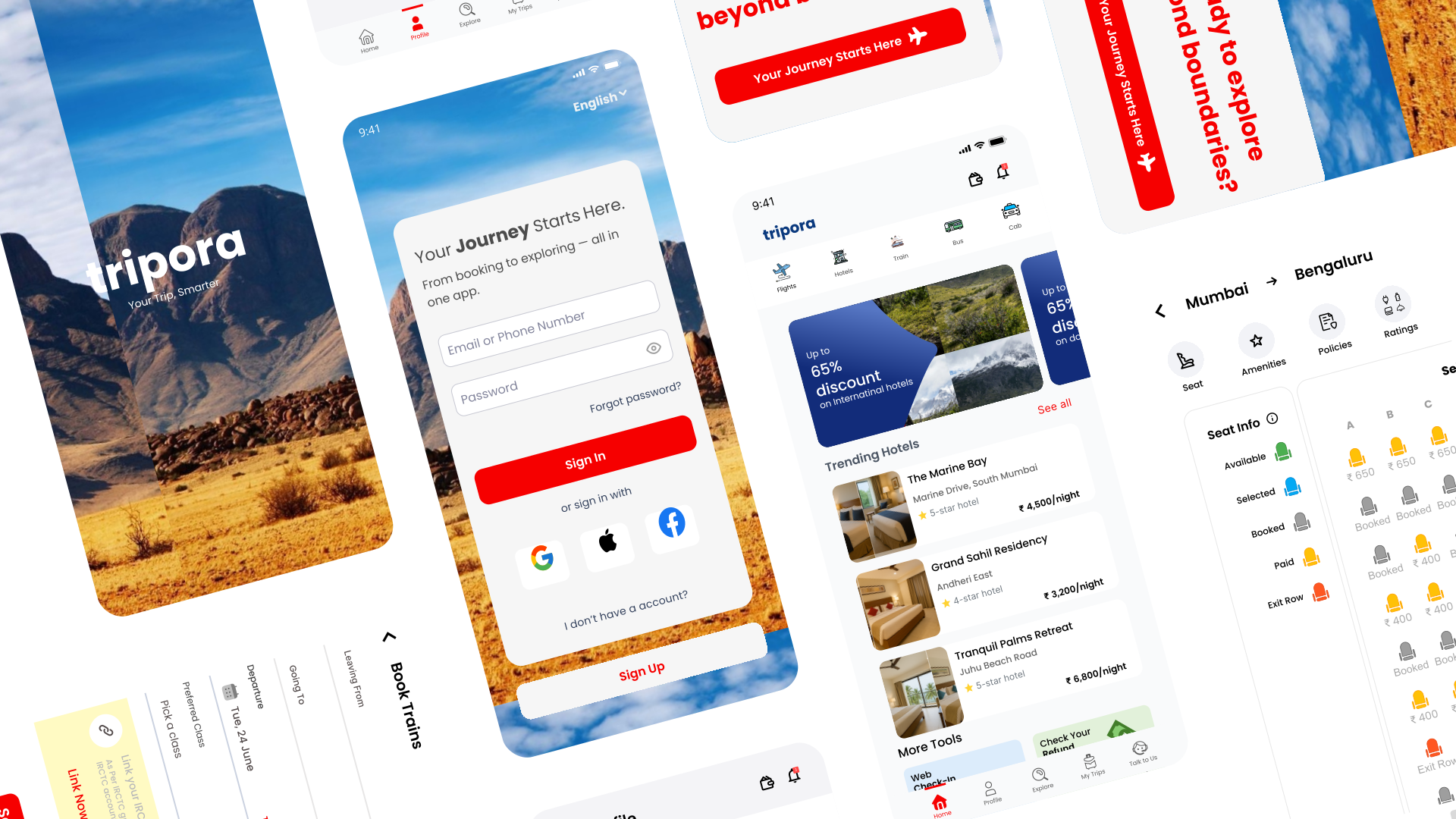
Hi everyone!
Imagine it’s a long weekend coming up, and you suddenly feel like taking a break from your routine — maybe a quick trip to the mountains or a relaxing beachside getaway. Sounds exciting, right?
But then, reality kicks in — you find yourself juggling multiple apps just to check flights, browse destinations, compare hotels, read itineraries, and somehow try to stitch it all together. Everything feels scattered, time-consuming, and honestly, a bit overwhelming.
Now, imagine having one single app that understands you — your budget, your vibe, your pace — and curates the perfect trip. From weekend escapes to dream vacations, it helps you discover, plan, and book everything in one place — effortlessly.
That’s what inspired me to design tripora – Smart Travel Assistant, a personalized, all-in-one travel planning app built with Indian travelers in mind.
In this case study, I’ll walk you through how I approached the problem, uncovered key user pain points, and crafted a seamless experience that makes travel planning smart, simple, and stress-free.
Part 1 - A Quick Summary of the Case Study
○ Sprint - The beginning of an idea to solve fragmented travel planning for Indian users.
○ How did I come up with a PROBLEM STATEMENT?
○ Defining the need to create a travel assistant from scratch.
○ Understanding common pain points travelers face while planning trips.
○ Identifying a gap in existing travel apps for personalization, simplicity, and control.
○ Designing an all-in-one experience - from discovery to booking to execution.
○ Presenting the Final UI Screens.
Part 2 - Detailed Work Process
○ Defined the problem using real-world pain points, project brief, and initial hypotheses.
○ Conducted primary and secondary research.
○ Validated pain points with insights from both research methods.
○ Created personas and mapped the customer journey
○ Created HMW (How Might We) statements and mapped the information architecture & user flows.
○ Designed wireframes and developed high-fidelity UI in Figma.
○ Created Clickable Prototype & User Testing.
○ Outlined future scope and summarized key learnings.
Sprint - The Beginning
This was the second project I took up for my portfolio.
While my first project involved building a product from scratch, this time I wanted to take it a step further by
owning the complete UX cycle — from identifying the problem space to validating the final solution with
real users.
The sprint was framed around solving real-world challenges through user-centered design principles.
I chose to work on a Smart Travel Assistant app, aimed at simplifying the chaotic and overwhelming
experience of planning trips — especially for Indian travelers.
This project gave me the opportunity to apply everything I had learned: from user research, persona creation,
and user flows, to wireframing, UI design, and usability testing — all with a focus on creating a
seamless and intelligent travel planning experience.
How did I come up with a PROBLEM STATEMENT?
A brief about tripora
tripora is a smart travel assistant app designed for Indian users who want to plan trips efficiently,
on their own terms, without jumping across multiple platforms. It curates travel experiences based on
preferences, budget, lifestyle, and trip goals - making the planning process seamless, intuitive,
and stress-free
Why I chose travel planning as a problem to solve
Travel is meant to be exciting - but planning one often isn’t. I chose this domain because I’ve personally
experienced the hassle of switching between websites and apps to piece together a trip. I wanted to explore
how to centralize and personalize the travel planning process so users can actually enjoy preparing for
their journey - not dread it
I decided to focus on personalization and end-to-end experience. Why?
○ Personalization - Every traveler has different needs: some travel solo, others with families, some on
strict budgets, others for experiences. Yet, most apps offer a one-size-fits-all approach. I wanted to design for
relevance over randomness.
○ End-to-end experience - Instead of only focusing on bookings, I aimed to address inspiration,
planning, booking, and organizing - all in one place. This would reduce friction, save time, and make the
experience enjoyable.
These core focus areas were shaped by both Primary and Secondary research insights — from real users,
behavioral patterns, and competitive analysis
Users I had in mind before moving ahead:
Professionals, families, and retired individuals aged 20 to 70, especially in Tier 1 and Tier 2 Indian cities,
who enjoy traveling but often face challenges with planning due to time constraints, lack of personalization,
decision fatigue, or too many disconnected tools
Problem Statement:
Design a smart travel assistant app from scratch that simplifies the trip planning process for Indian travelers by offering centralized, personalized, and intelligent recommendations. The app should help users go from inspiration to execution seamlessly, while aligning with their interests, budget, and preferences — making travel planning enjoyable, not exhausting.
Defining the need to create a travel assistant from scratch
○ No existing app or flow to improve - needed a fresh, end-to-end solution
○ Identified a gap in the market for a centralized, personalized travel planner
○ Existing solutions are fragmented - users switch between multiple apps (flights, hotels, busses, etc.)
○ Lack of customization based on Indian travelers’ needs, preferences, and budgets
○ Aimed to solve decision fatigue and make travel planning stress-free and joyful
○ Needed to define everything from feature set, user flow, IA, and UI design
○ Focus on creating value through personalization and ease of use
○ Goal: Offer a smart assistant that supports users from trip inspiration to execution
Understanding common pain points travelers face while planning trips.
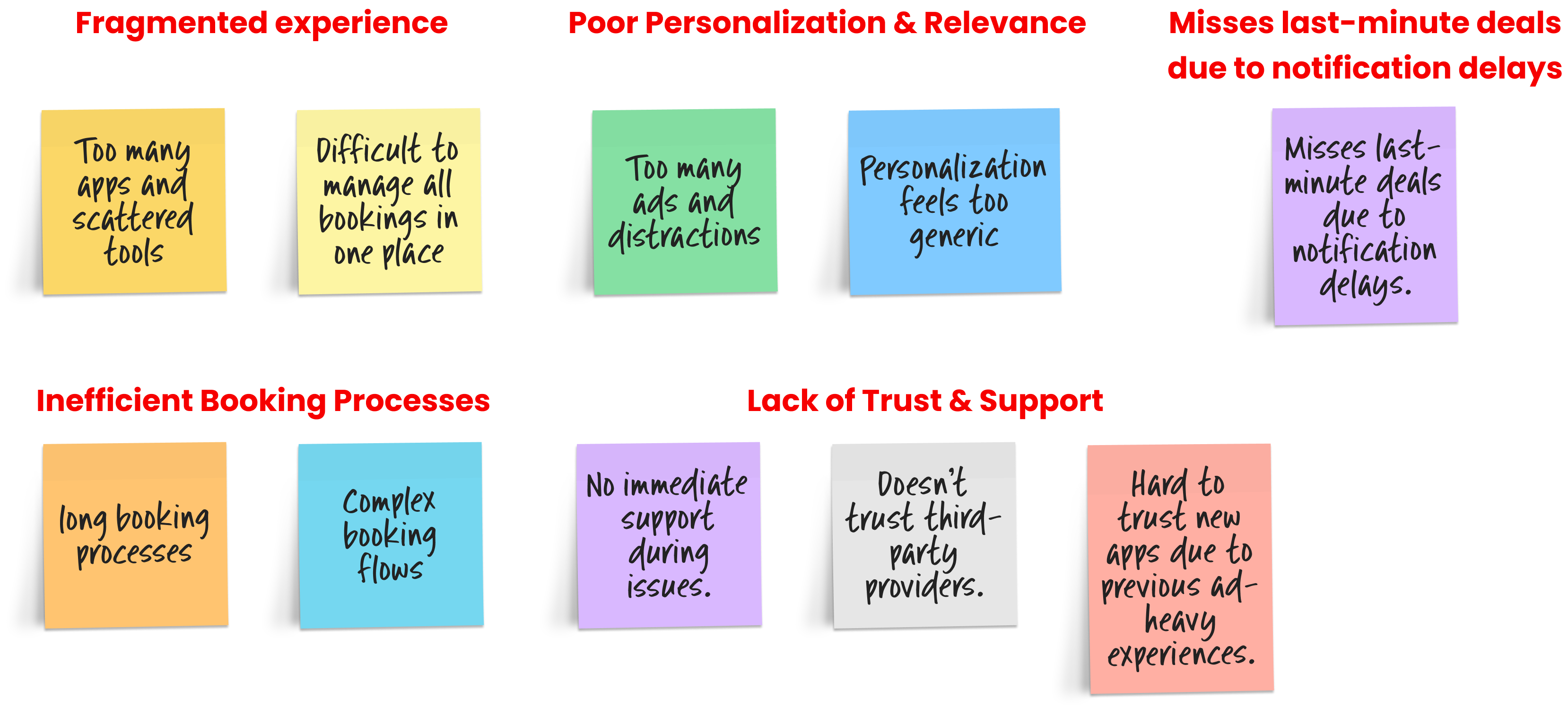
Validating Pain Points Through Research Insights
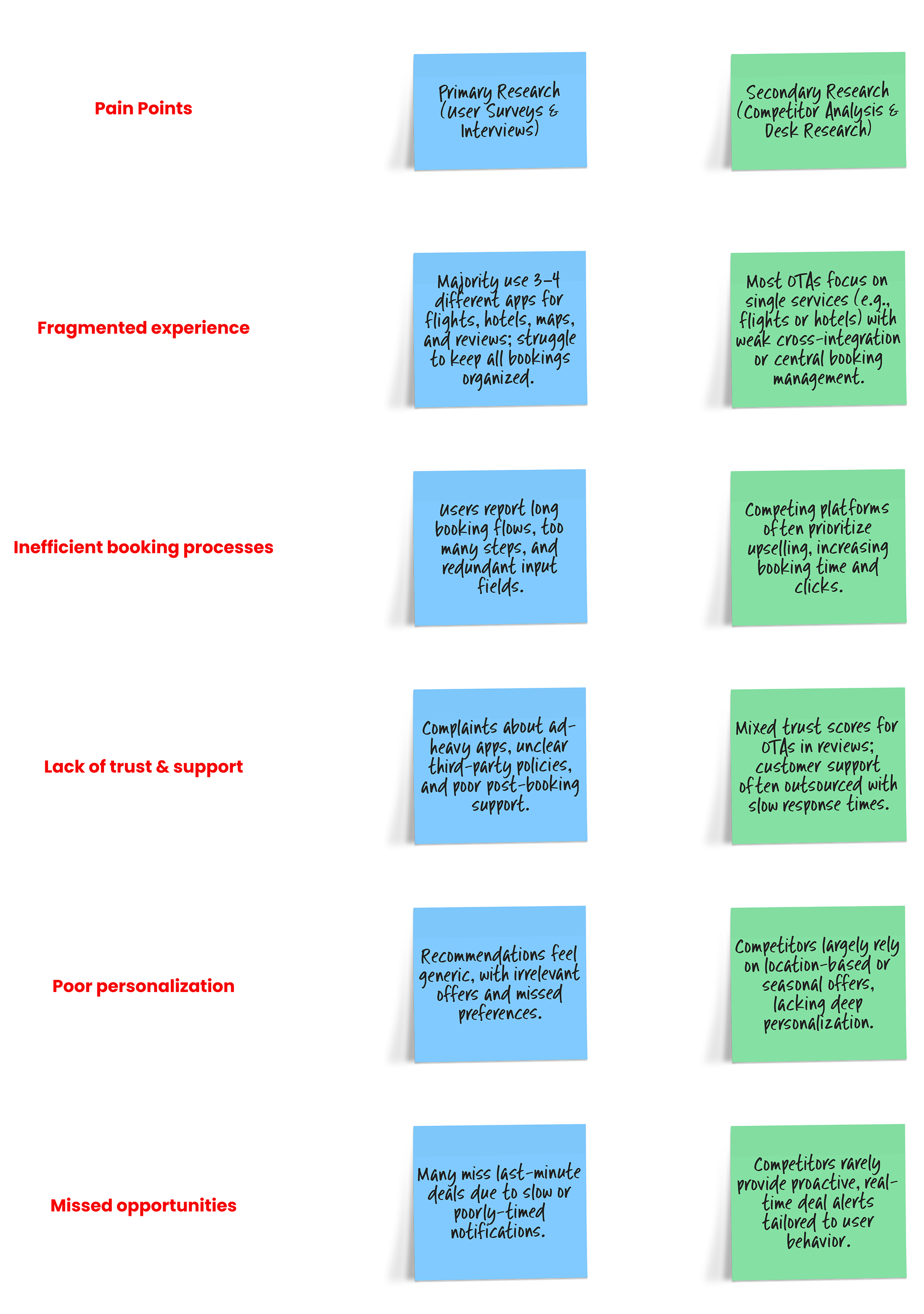
○ Fragmented experience → 76% of users said they regularly switch between 3–5 apps to complete trip planning.
○ Inefficient booking processes → 62% mentioned that booking takes too long due to multiple verification and search steps.
○ Lack of trust & support → Over half of the respondents shared that slow or no customer support reduced their confidence in booking through certain apps.
○ Poor personalization & relevance → 58% felt suggestions in travel apps didn’t match their preferences or budget.
○ Missed opportunities → Nearly 40% had missed deals because they were notified too late.
Identifying a gap in existing travel apps for personalization, simplicity, and control.
Lack of Personalization
○ Most apps offer generic suggestions not tailored to user interests, travel styles, or budgets
○ No smart recommendations based on past behavior, preferences, or goals
Too Many Disconnected Tools
○ Users rely on 4 - 5 different apps for flights, hotels, itineraries, and activity planning
○ This creates decision fatigue and fragmented experiences
Poor User Control
○ Limited flexibility in customizing plans or switching between travel types (solo, family, budget, etc.)
○ Rigid flows that don’t adapt to how different users think or plan
Complex and Overwhelming UI
○ Information is often cluttered or hidden
○ New or less tech-savvy users (e.g., retirees) find it difficult to navigate
Missed Opportunity for End-to-End Planning
○ Most apps focus only on booking - very few cover the entire travel journey from inspiration to execution
Designing an All-in-One Travel Experience
User Flow Registration / Home

User Flow - Booking
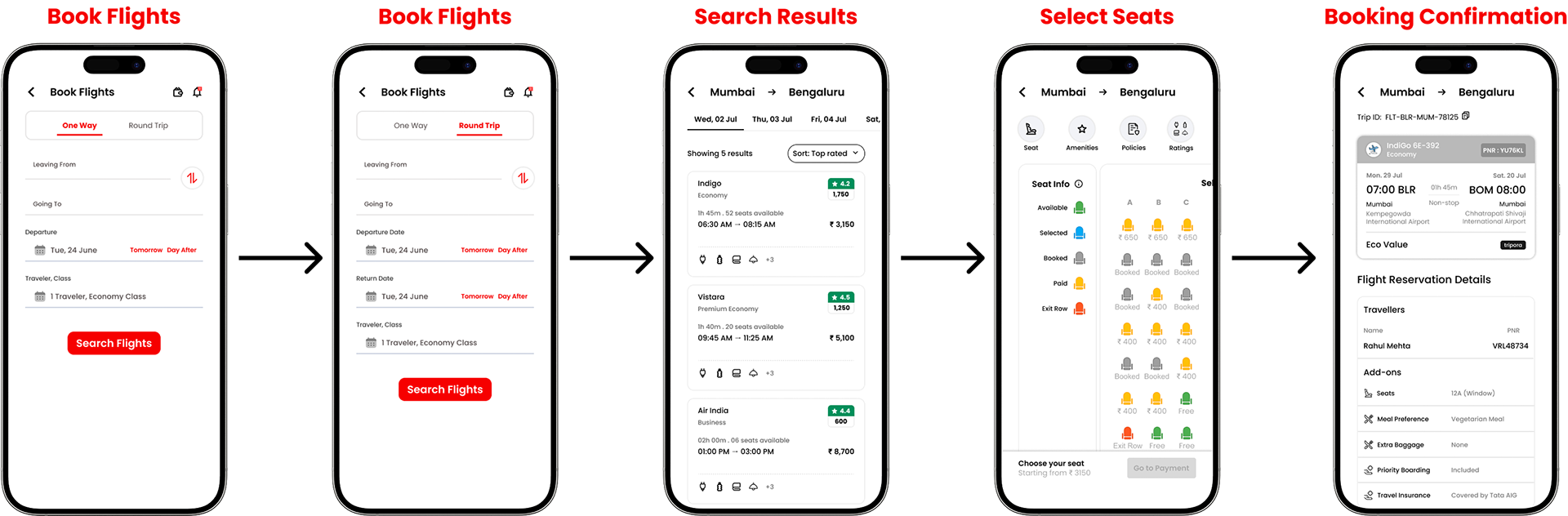
○ In “Book Flights”, the user selects whether it’s a one-way or round trip.
○ Then choose the departure and destination cities, number of travelers / class, and dates (departure and return if round trip).
○ On the Search Results page, the user selects a flight based on availability.
○ On the Select Seats page, they choose their seat and proceed by clicking “Go to Payment”.
○ After completing the payment, the Booking Confirmation page displays the finalized booking details.
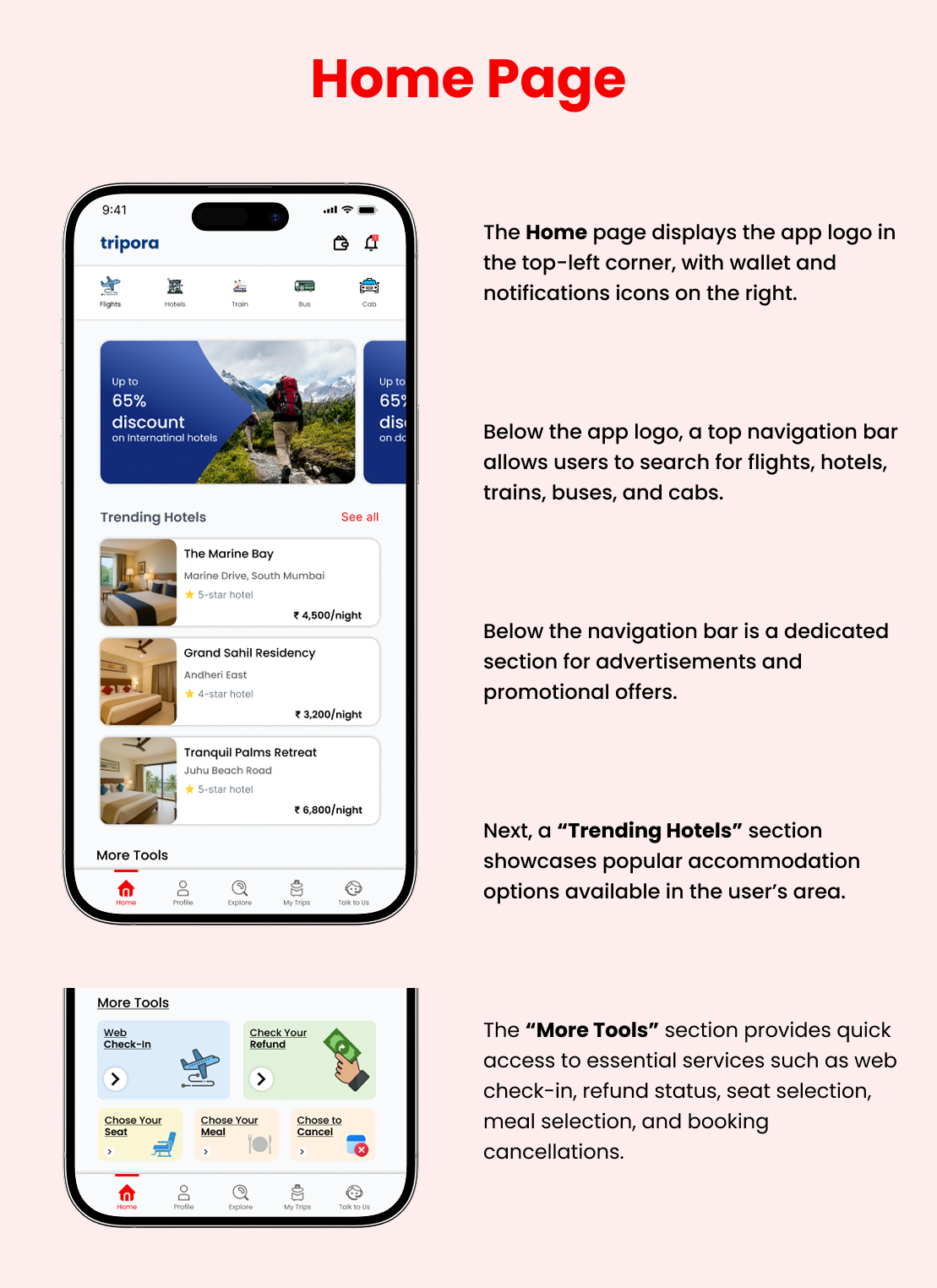
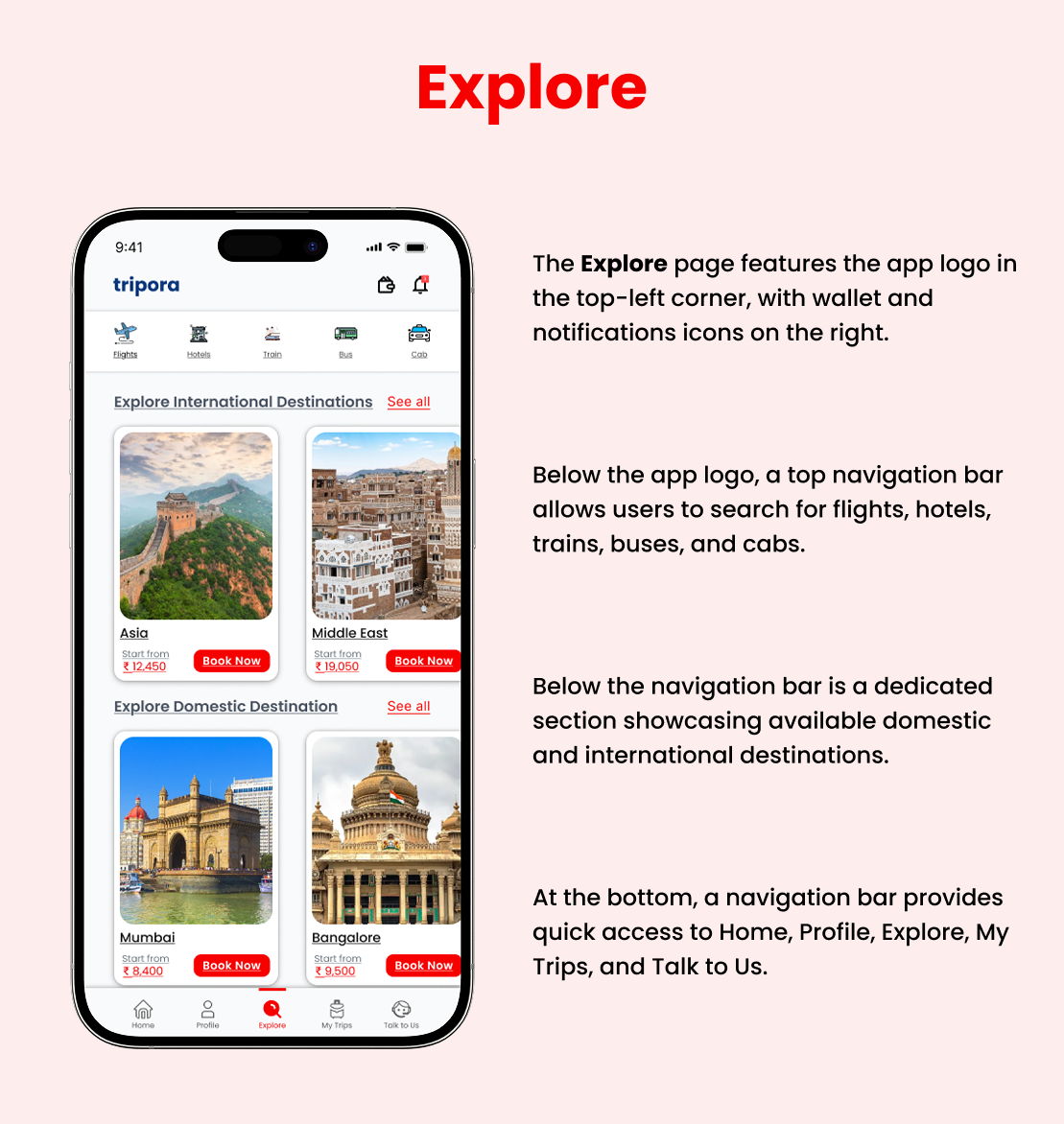
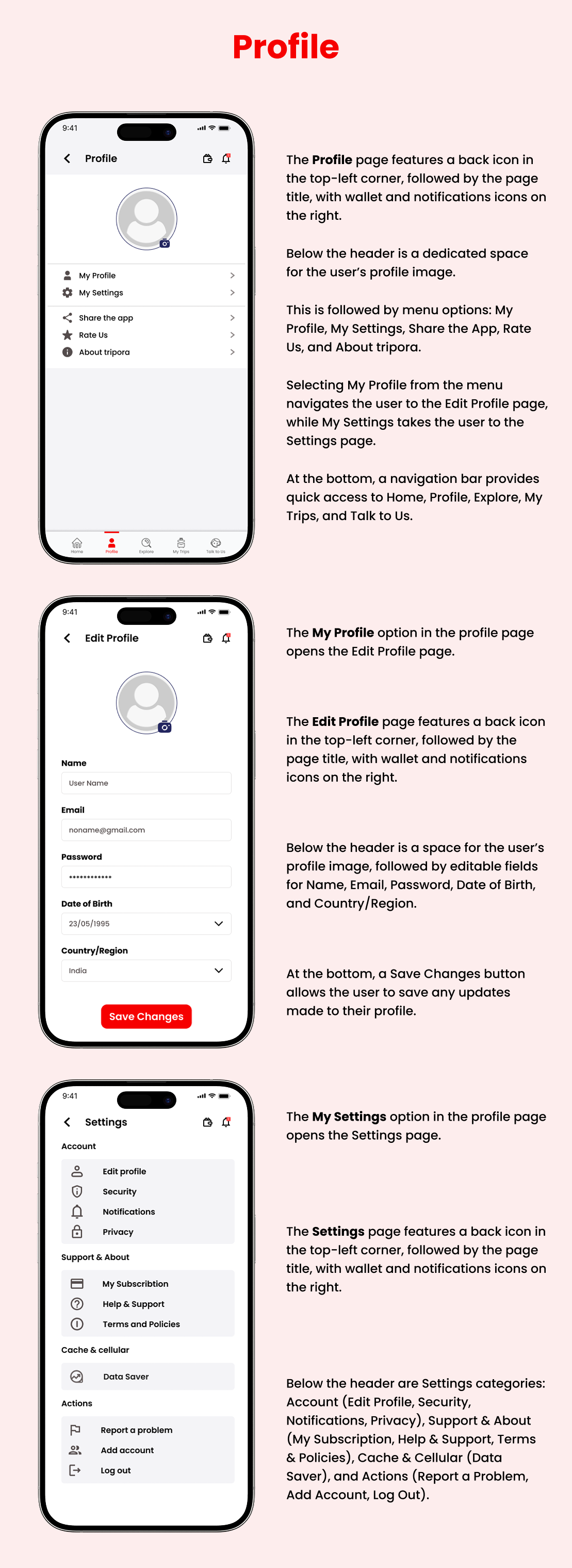
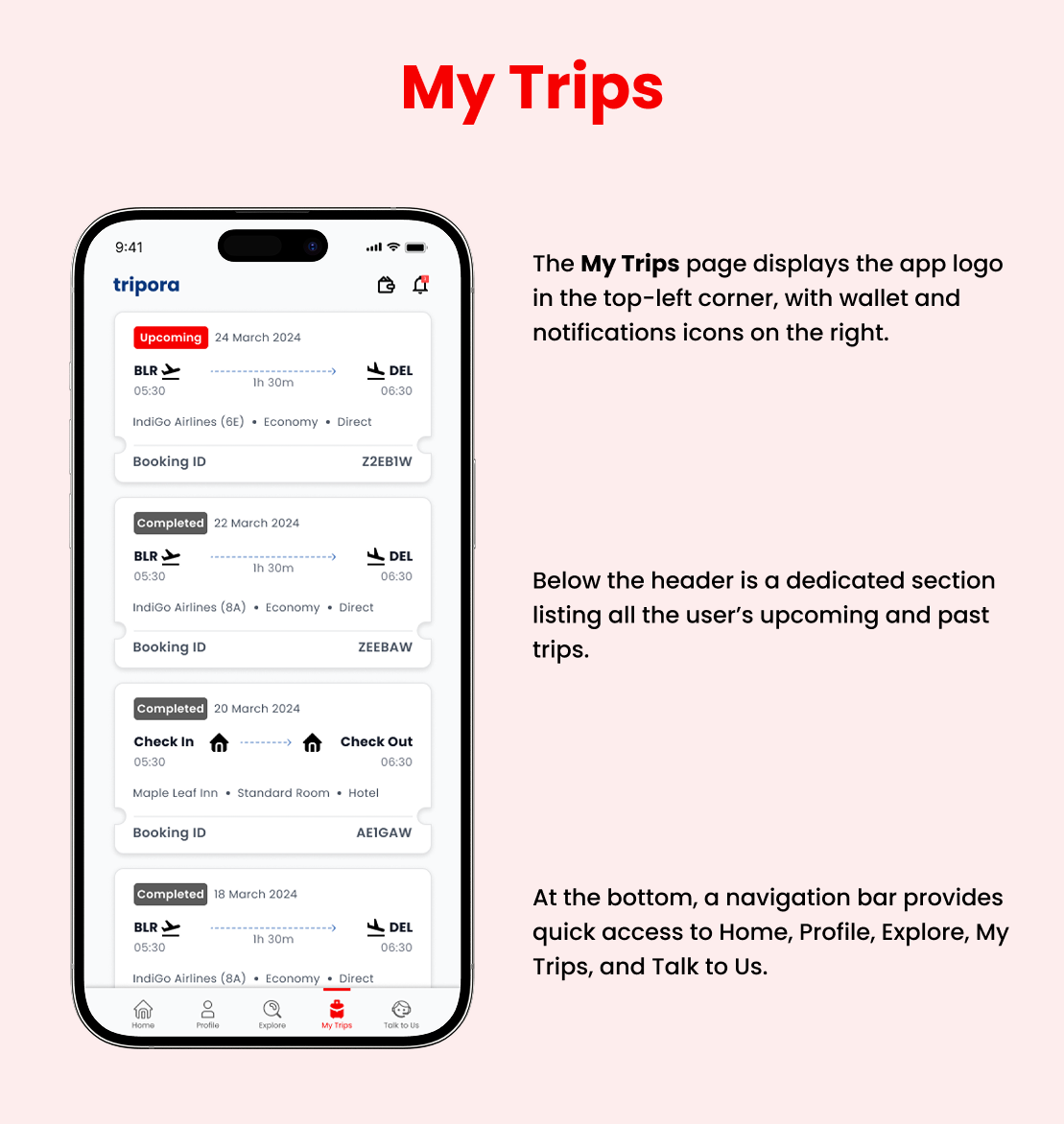
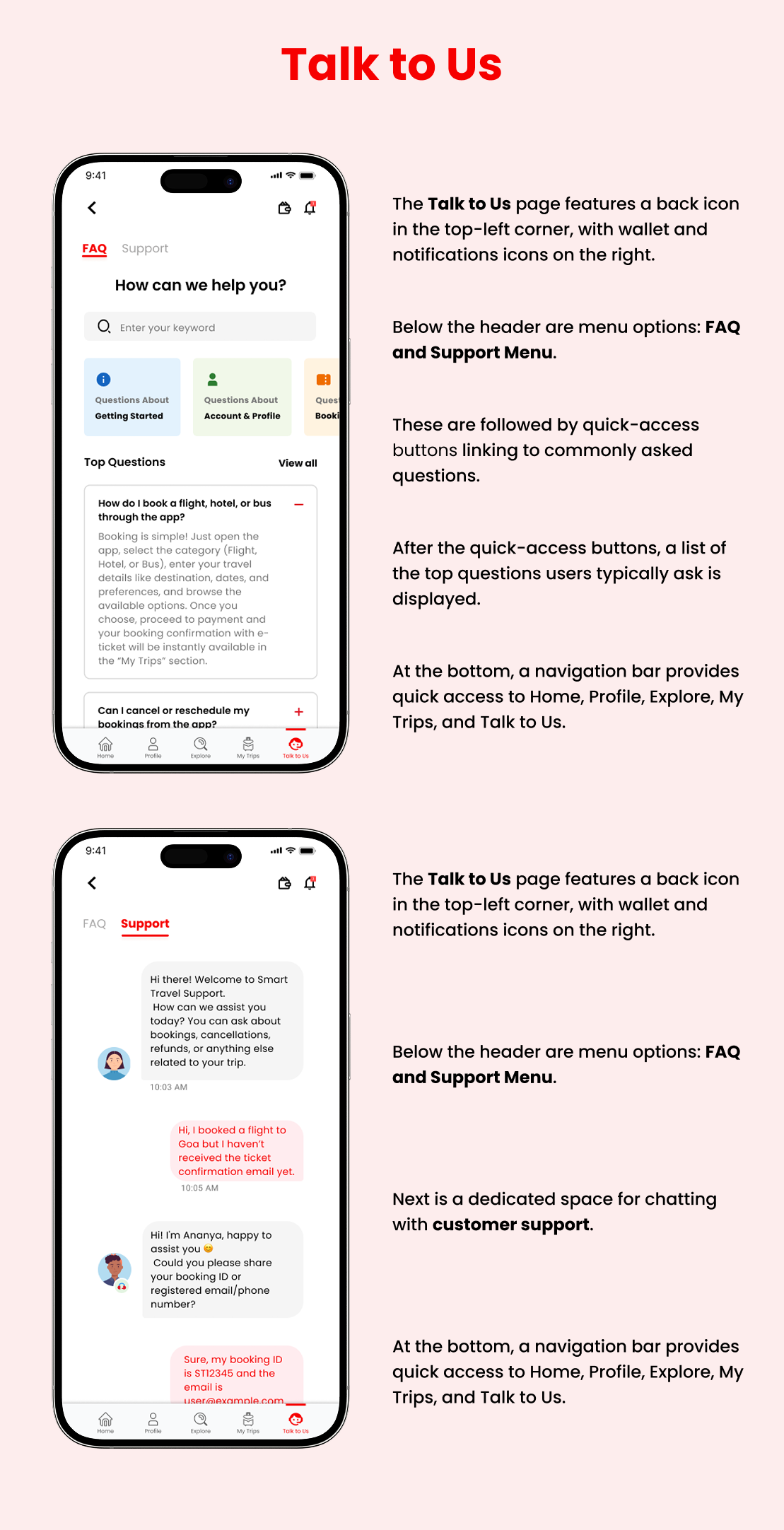
Presenting the Final UI Screens.
Defined the problem using real-world pain points, project brief, and initial hypotheses.
Defined the Problem
○ Project Brief: Create a Smart Travel Assistant app to simplify trip planning with curated recommendations,
real-time updates, and all-in-one booking & management.
○ Target Audience: Travelers aged 20–70 in Tier 1 & 2 Indian cities who face time constraints, scattered tools,
lack of personalization, and low trust in existing platforms.
Key Pain Points:
○ Fragmented experience – multiple apps, hard-to-manage bookings
○ Inefficient booking flows – long, complex processes
○ Lack of trust & support – slow help, ad-heavy, distrust of providers
○ Poor personalization – generic suggestions, irrelevant ads
○ Missed opportunities – delayed deal notifications
Initial Hypotheses:
○ All-in-one planning & booking will save time and reduce stress
○ Better personalization will drive engagement
○ Real-time support & timely notifications will improve trust
○ Streamlined booking flows will reduce drop-offs
Conduct primary and secondary research
Primary Research (User Surveys & Interviews)
I conducted surveys and interviews with travelers aged 20–70 from Tier 1 and Tier 2 Indian cities, including solo, family, and group travelers.
The objective was to uncover trip-planning habits, key frustrations, and desired features.
Key insights:
○ Heavy reliance on multiple apps (flights, hotels, maps, reviews) creates a fragmented experience.
○ Long booking processes and complex flows lead to drop-offs.
○ Generic personalization causes users to miss relevant deals.
○ Trust issues stem from ad-heavy interfaces and unclear third-party policies.
○ Difficulty in managing bookings in one place, especially during last-minute changes.
○ These insights validated my initial hypotheses and guided the problem definition for tripora.
Secondary Research
○ Travel apps are moving toward AI-powered trip planning and conversational assistants to simplify end-to-end planning.
○ Leading Online Travel Agencies in India focus on multimodal booking (flights, trains, buses, hotels) and increasingly on integrated trip planning features.
Competitor Analysis (Strengths / Gaps)
MakeMyTrip -
Strengths: broad inventory and market reach; recently launched an AI trip-planning assistant.
Gaps: customer support and booking-management pain reported by users.
ixigo -
Strengths: AI-powered itinerary builder and multi-modal planning tailored to Indian travel patterns.
Gaps: opportunity to unify bookings + deeper personalization across trips.
Airbnb -
Strengths: rich experiences and integrated “Trips” itinerary features; moving toward AI-first assistants and services.
Gap: primarily accommodation-first — not a full Online Travel Agencies for flights/buses/trains in India.
Cleartrip -
Strengths: Clean, minimal interface with a focus on quick search and booking; strong integration with flights and hotels; frequent discounts and offers.
Gaps: Limited post-booking management tools, weaker personalization, and lacks a fully integrated trip-planning experience.
Validated pain points with insights from primary and secondary research
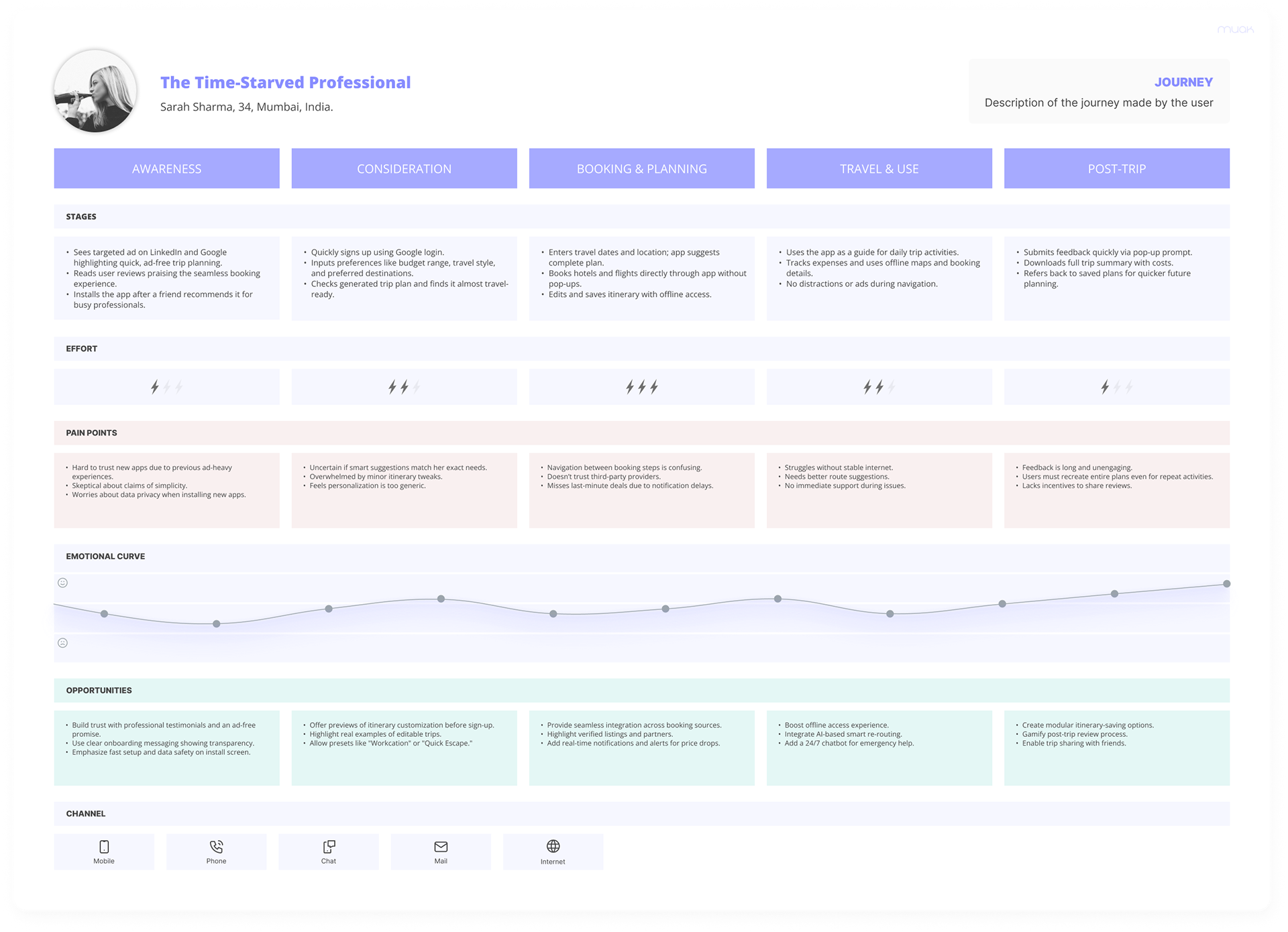
Created personas and mapped the customer journey.
User Personas

Customer Journey
Created HMW statements and mapped the information architecture & user flows.
HMW Statements
Fragmented Experience - How might we enable travelers to plan, book, and manage all trip details in one unified platform?
Inefficient Booking Processes - How might we make the booking process faster and simpler without sacrificing important options?
Lack of Trust & Support - How might we build trust and offer immediate support at every stage of the journey?
Poor Personalization - How might we provide truly personalized recommendations that match a traveler’s preferences, budget, and context?
Missed Opportunities - How might we deliver timely, relevant deal alerts so travelers never miss last-minute offers?
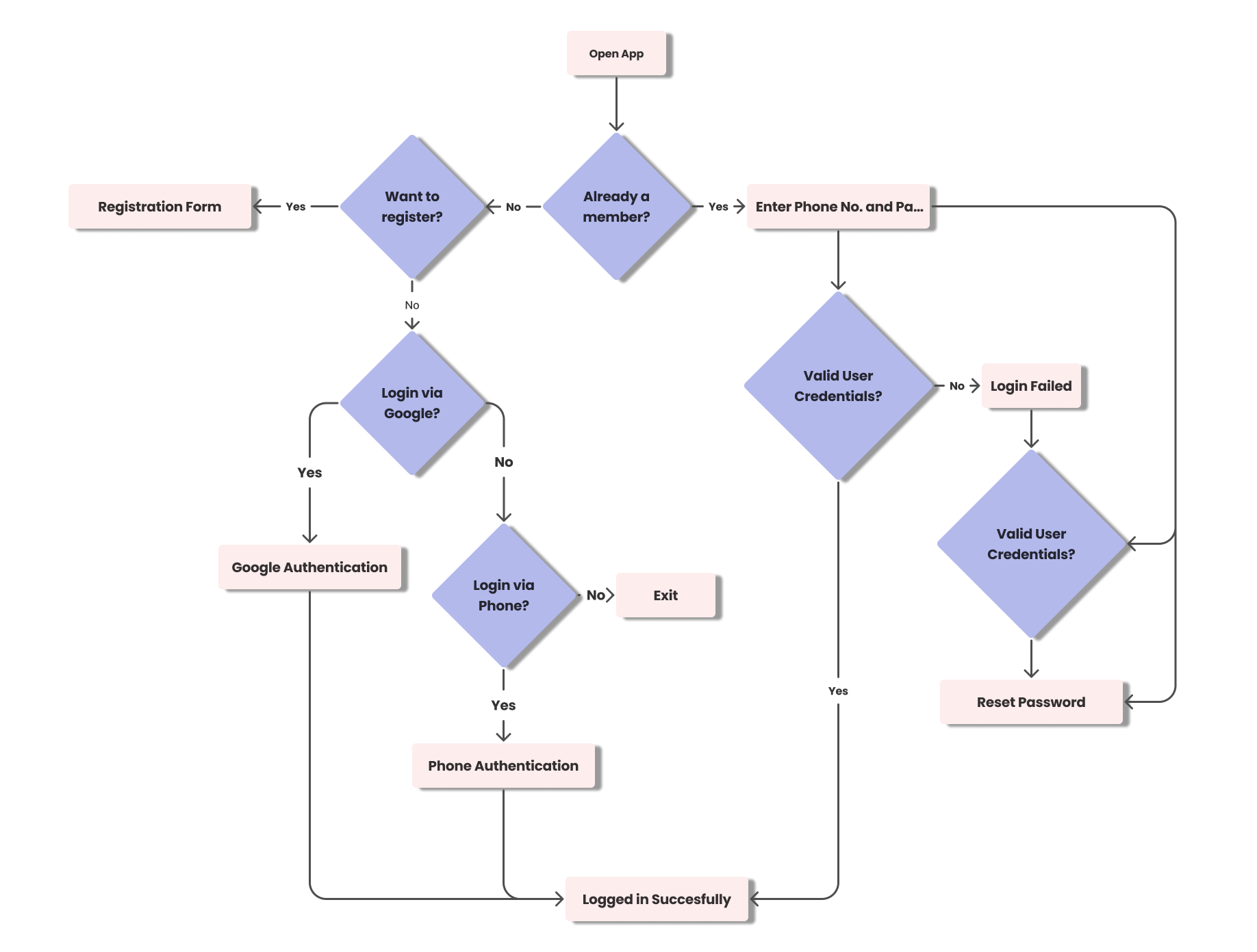
User Flow - Registration
Information Architecture

Designed wireframes and developed high-fidelity UI in Figma.
Moving on to the fun part that is building UI.
To visualize and refine my ideas, I started by creating digital low-fidelity wireframes directly on my PC.
This approach allowed for quick iterations, easy adjustments, and better alignment with the final screen dimensions.
Once the core structure felt right, I evolved these into high-fidelity designs in Figma, applying Tripora’s brand colors, typography, and iconography.


Tripora Travel App – Clickable Prototype & User Testing
Summarized future scope & key learnings.
Future Scope
○ Integrate AI-driven itinerary suggestions based on user preferences and past trips.○ Add multi-modal transport combinations (e.g., Integrate the current flight + hotel + bus + trains with tripora's own cab in one booking).
○ Implement real-time travel assistance with chat-based trip updates and local tips.
○ Expand loyalty program integration with airlines, hotels, and Online Travel Agencies.
○ Include offline mode for itinerary access without internet.
Key Learnings
○ Building a product from scratch needs clear problem framing before diving into design.○ Early and continuous user feedback prevents major redesigns later.
○ A strong design system accelerates development and keeps visuals consistent.
○ Testing with varied user groups revealed different priorities and usability challenges.
○ Simple, intuitive flows drive adoption more than adding too many features at once.
Explore More Work
Discover additional projects and creative explorations on my professional platforms
Behance Portfolio
Curated collection of UI/UX case studies and design process documentation
ArtStation Gallery
3D modeling, VFX work, and digital art showcasing technical artistry
LinkedIn Profile
Professional network, recommendations, and career journey insights
Ready to Create Something Extraordinary?
Let's collaborate and bring your vision to life with the perfect blend of technical artistry and user-centered design thinking.